
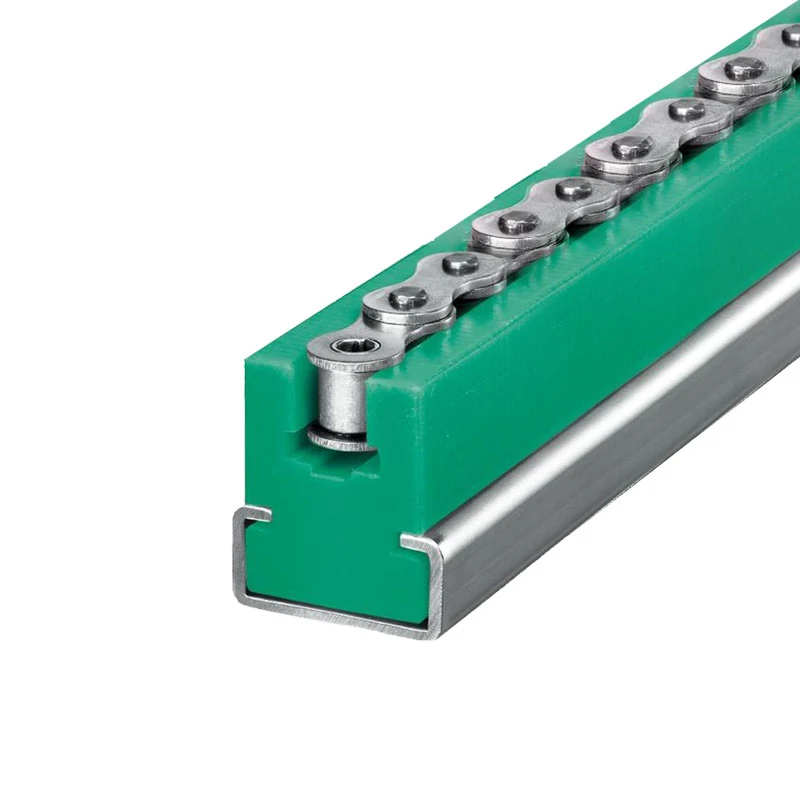
1. Capture the mating interface
Show the chain, rail or existing component that meets the proposed part. Photos, cross-sections and drawings all help identify the relevant interface.
- Chain or mating-component cross-section
- Existing part photos from more than one angle
- Any drawing or profile reference already available
2. Clarify installation and geometry
A useful brief describes how the component is mounted, the required length and any bends, slots or support points that shape the request.
- Mounting arrangement
- Target length and any shaped geometry
- Current component or sample, if one is available
3. Explain the equipment context
Identify the equipment type, the moving path and the operating environment. The supplier can then discuss the appropriate profile and material direction for that specific requirement.
- Conveying, filling or transfer equipment context
- Movement and contact-path description
- Expected quantity and delivery location
4. Frame the material discussion
A profile code identifies a starting direction, not the final material. State whether the project needs discussion of UHMWPE, nylon, PTFE, antistatic or conductive material directions; final grade and suitability require confirmation for the equipment and environment.
- Existing model code, if available
- Material direction to discuss
- Any clean, static-sensitive or special operating condition